Choosing an upright comfort or cruiser bicycle for short, flat, unhurried riding
Bought the bike, now what? Five running costs a cruiser adds in its first year
Tires, chain, chrome, tune-ups, and the rack, basket, lock and lights most riders buy within months, with the rough figures a careful buyer should budget.
El Paseo Cruisers
The sticker on a new upright cruiser is the smallest decision you will make about it. Within a year, most riders have added a lock, some light, a way to carry groceries, and at least one shop visit, and the total of those small purchases often lands somewhere between a fifth and a half of what the bike itself cost. None of it is a surprise if you count it in advance. A careful reader checks the running column before signing the purchase order, because that is where the bike either stays easy or quietly becomes a chore parked in the garage.
Tires and tubes, the cost that arrives first
Cruiser tires are fat, low-pressure, and slow to wear on flat pavement, which is good news for the tread and bad news for your attention. Balloon tires at twenty or thirty pounds of pressure feel fine when they are soft, so riders roll on underinflated rubber for months and collect pinch flats. A replacement tube is a few dollars, a shop flat repair runs into the low tens, and a pair of decent replacement tires with puncture protection sits in the same range as a modest dinner out. Budget a floor pump with a gauge once and the rest of that line item mostly disappears.
Chain, cogs, and the interval nobody schedules
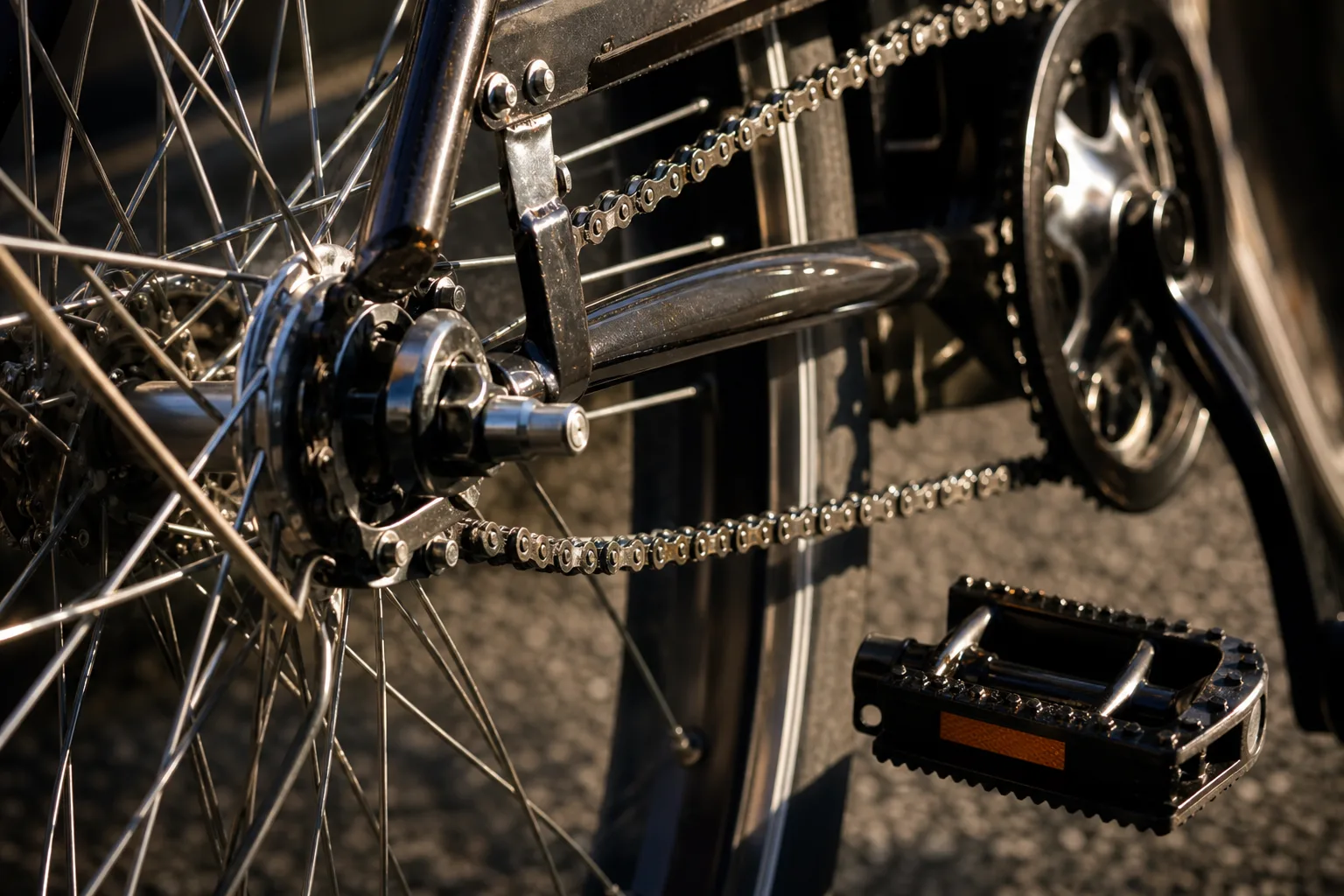
A single-speed or internally geared cruiser has the most forgiving drivetrain sold, one straight chain line and no derailleur pulleys collecting grit, and it still needs oil. Left dry through a wet season, a chain stretches, the cog teeth hook, and a cheap part takes an expensive part down with it. A chain is one of the least costly components on the bike; a chain plus a rear cog plus labor is several times that. Check for surface rust and stiff links every few weeks, wipe, relubricate, and the interval stretches out to years.
Chrome fenders, salt air, and the twenty-minute fix
Chrome on a cruiser is thin plating over steel, and it fails where water sits: the fender edges, the inside of the struts, the underside of the rear stay near the mounting bolt. Coastal air and winter road salt accelerate it. What a careful reader checks on a used bike is the fender underside and the bolt heads, not the shiny top surface, because pitting starts hidden. Fine steel wool with a light oil, then a wipe of car wax twice a year, costs almost nothing and holds the finish. Replacement fenders cost real money and rarely fit as cleanly as the originals.
The tune-up you should actually book
Most shops offer a first free adjustment inside the first month or two, when new cables have stretched and spokes have settled, and skipping it is a false economy. After that, a basic tune, cables, brake adjustment, wheel truing, bearing check, typically runs in the low-to-mid double digits, and once a year is enough for a bike doing short, flat errands. Coaster brake hubs want a repack every few years, which is a separate small charge. The Consumer Product Safety Commission oversees the equipment standards new bicycles are sold under, including reflector placement, which is worth knowing before you strip anything off.
Rack, basket, lock and lights, the accessories nearly everyone buys
A cruiser without cargo capacity gets ridden less, so a front basket or a rear rack with a folding pannier arrives early for most owners, each in the range of a nice pair of shoes, with installation sometimes billed separately if the frame lacks eyelets. A U-lock heavy enough to matter costs more than a cable lock and is worth the difference in any city. Lighting is the item people underspend on twice: a rechargeable front light and rear blinker, bought once at a sensible price, outlast three cheap sets and keep working when a ride runs past sunset.
Add it up honestly before you buy, and the picture is reassuring rather than alarming: the recurring spend on a flat-terrain cruiser is small, predictable, and largely under your control, concentrated in a pump, a bottle of chain oil, and one shop visit a year. The one-time purchases, lock, lights, basket, are the bigger number, and they are the ones that determine whether the bike becomes the thing you reach for on a Saturday morning.